At a glance
The story at a glance
- The base station is more than a parking place.
- Self-cleaning mop pads change the rhythm of floor care.
- Room maps turn a familiar floor plan into a robot’s route.
- Regular small cleans suit the way a lived-in home gets messy.
- Automation reduces the chore without making every task disappear.
The floor between everything else
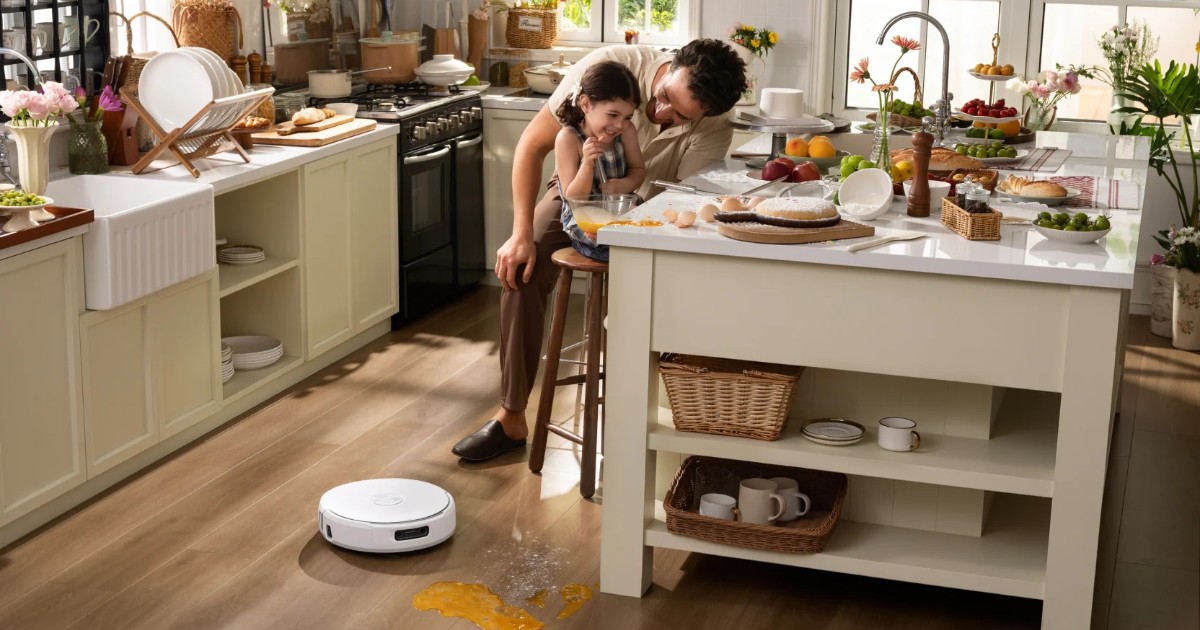
A kitchen floor tells the story of a day in small, unflattering fragments: a dusting of flour near the counter, a few crumbs under the table, a faint footprint where someone crossed the room in damp shoes. None of it is dramatic. That is partly why it is so persistent.
Narwal Robots approaches this ordinary accumulation with a product that is both conspicuous and easy to forget: a robot vacuum and mop that moves through the home while its owner does something else. The machine and its base station have a physical presence, but the experience they promise is less about watching a gadget perform than about gradually paying less attention to the floor.
Narwal is known for the world’s first self-cleaning mop robot, a distinction that points to a particular way of thinking about the chore. Vacuuming and mopping are not just matters of moving a cleaning head across a surface. There is also the cloth to rinse, the dirty water to deal with, and the familiar moment when a mop seems to be pushing yesterday’s mess into a new corner. Narwal’s product world begins with those less glamorous details.
The result is a category of smart-home appliance designed for the spaces that get used hardest: the open kitchen, the hallway between rooms, the stretch of floor beside a sofa. Its subject is domestic maintenance, but its appeal lies in a quieter idea—that a room can feel cared for without making a ceremony out of cleaning it.
A mop with its own place to return
The base station is central to understanding the Narwal experience. It is not simply a parking spot where a robot waits between outings. On models with self-cleaning mops, it is also where the machine can return to have its mop pads washed. The robot travels out into the room, and the station handles part of the work that would otherwise follow a manual mopping session.
That distinction changes the rhythm of the task. A conventional mop invites a sequence: fill a bucket, clean the floor, rinse the mop, empty the bucket, find somewhere for the equipment to dry. A Narwal system moves some of that sequence into the appliance itself. Depending on the model, the station can also provide other forms of maintenance, such as drying mop pads. The particulars vary, but the underlying idea is consistent: the machine should attend to some of its own mess.
This does not mean cleaning disappears. Water tanks still need human attention, and pads and other components need care over time. A base station also occupies floor space and becomes part of the room’s practical landscape. But that is a different relationship with the chore. Instead of preparing to mop every time the floor needs it, the owner manages a piece of equipment that can take on repeated passes.
The interesting part is not that a mop moves by itself, but that it has somewhere to go afterward.
Vacuuming and mopping in the same conversation
Narwal’s machines belong to a generation of robot cleaners that treat dust and damp cleaning as related jobs. That makes sense in a real home, where the boundary between the two is rarely neat. Fine debris collects along the edge of a room; a spill leaves a tacky patch nearby. A floor can need more than one kind of attention without looking especially dirty.
The brand’s robot vacuums and mops bring those tasks into one device rather than asking for separate cleaning sessions with separate tools. Some Narwal models use rotating mop pads, a visible reminder that the machine is doing more than dragging a damp cloth across the floor. The pads work against hard surfaces while the robot navigates the room; the vacuuming system addresses loose debris.
The distinction between dry and wet cleaning still matters. A robot cannot make a deep stain vanish simply because it has a mop, and the texture of a floor affects how well any cleaning method works. Crumbs beneath a chair are not the same problem as dried food pressed into a grout line. Narwal’s appeal is strongest in the recurring, relatively modest work that makes up so much of housekeeping: keeping loose dust from accumulating and giving hard floors regular attention.
It is a less theatrical idea than the promise of a miraculous clean. The benefit is in repetition. A floor that receives frequent care may not demand the same long, deliberate session as one left alone until the mess becomes impossible to ignore.
Reading a room, then moving through it
A robot cleaner has to negotiate a home that was not built for it. Dining chairs interrupt the straight line across a floor. Rugs sit beside hard surfaces. A doorway turns one space into another. Narwal uses smart navigation and, in some products, AI-powered features to help its robots move through these environments rather than simply traveling in random directions.
Mapping gives the machine a way to organize the floor plan. Instead of treating a home as one undifferentiated surface, compatible models can represent rooms and routes in an app. That can make the experience feel more intentional: a kitchen is not just the next patch of floor the robot happens to encounter, but a place with its own cleaning needs.
Obstacle recognition is part of the broader smart-cleaning picture, though capabilities vary by model and no system should be imagined as perfectly perceptive. A cable, a small toy, a low piece of furniture, or an unusually shaped object can still complicate a robot’s route. Floors are full of things that humans understand instantly and machines must interpret through sensors.
There is something appealingly unglamorous about that problem. The intelligence in a robot vacuum is not there to produce a grand display. It is there to help the machine get around a chair leg, return to its station, and continue the work. The technology matters because the room itself is complicated.
The app as a small household map
The companion app is where the invisible planning becomes visible. A map of rooms turns a cleaning run into something a person can direct: send the robot to a particular area, establish boundaries, or set a schedule, depending on the model and its available features. The screen is a way to communicate priorities without standing over the machine.
That can be useful in homes where floors do not all get dirty at the same pace. The kitchen may collect crumbs every day, while a less-used room changes slowly. An entryway may gather dust and grit from shoes even when the rest of the home looks tidy. A room-based approach makes it possible to think about cleaning in those uneven patterns rather than as a single event that must cover the entire house.
The app also gives the robot a place in the routines people already have. A scheduled run can happen while the floor is relatively clear; a targeted run can address a busy area without turning into an afternoon project. These are modest conveniences, but they fit the scale of the problem. Most household cleaning is not an emergency. It is a series of small decisions about what needs attention now and what can wait.
The map, then, is not just a technical diagram. It is a portrait of a lived-in home, translated into rooms and routes a machine can understand.
A machine for the in-between moments
Narwal’s Freo line is part of the brand’s recognizable product world: robot vacuums and mops paired with substantial base stations and designed around automated floor care. The look belongs firmly to contemporary smart-home electronics. The robot is low and rounded; the station is a larger, more architectural object, made to remain in view rather than disappear into a broom closet.
That physical arrangement affects the experience. A robot can slip beneath some furniture, depending on the clearance, and travel from one area to another without a person pushing it. The station, meanwhile, needs a settled place in the home. Together they turn cleaning equipment from something brought out for a task into something more like an appliance: present, connected, and ready to work within the household’s ordinary flow.
The most revealing moments may be the in-between ones. The machine leaves its station, passes along the edge of a room, changes direction around furniture, then returns. These movements can make a familiar space look briefly different. The floor becomes a route; the furniture becomes a set of obstacles; the base station becomes a small home within the home.
There is still sound and motion to live with. A robot cleaner is not an invisible service, and a base can be noticeable in a compact room. Narwal’s proposition is not that cleaning becomes imperceptible, but that much of its physical labor can happen without someone actively performing it.
The human work that remains
Automation is most convincing when its limits are visible. Narwal’s self-cleaning approach reduces some hands-on mop maintenance, but it does not turn the appliance into a system that never needs care. Dirty water has to be emptied, clean water replenished, and cleaning components maintained. The details depend on the model and how it is used.
The floor itself may also need preparation. A robot can travel around many ordinary obstacles, but a room scattered with cords, loose fabric, or small objects is a more difficult environment than an open one. Picking up a few things can be the difference between letting the machine move through a space and asking it to solve a problem it was never meant to solve perfectly.
There are cleaning jobs outside its natural range, too. Stairs do not become robot-friendly because the floor below them is mapped. A spill that needs immediate attention may call for a cloth. Edges, tight gaps, and stubborn marks can still require a person and a more direct tool.
None of this undermines the central idea. It gives it a useful scale. A Narwal robot is not a substitute for every form of housekeeping; it is a way to make routine floor care more regular and less demanding. The relationship is collaborative, even if the machine does the traveling.
Who gets to enjoy a cleaner floor?
The appeal of a robot vacuum and mop is easy to understand in a busy household, but busyness is only one part of the picture. Some people simply dislike the stop-and-start nature of floor cleaning: moving chairs, finding the mop, waiting for the surface to dry, then putting everything away. Others may value a way to keep frequently used hard floors in better order between more thorough cleaning sessions.
Pet owners are another natural audience for robot vacuums, since loose hair and debris can accumulate steadily rather than all at once. Homes with children may have their own recurring trail of crumbs and small messes. In either case, the relevant feature is not a perfect home but a lived-in one. Regular cleaning can be useful precisely because the floor keeps returning to use.
Narwal’s combination of vacuuming, mopping, and self-cleaning speaks especially clearly to people who want help with that repetition. It also suits an interest in smart-home technology: the map, app, sensors, and station all make the floor part of a connected domestic system.
The experience will feel different from home to home. Room layout, floor materials, furniture, and the amount of clutter all shape what a robot can do. The common thread is a wish to spend less attention on a task that never quite stays finished.
The pleasure of an ordinary room
There is a particular satisfaction in a clean floor that is easy to overlook because it rarely announces itself. Bare feet meet a smooth surface rather than a few grains of grit. The kitchen feels ready for the next meal. Light falling across the room reveals the floor, not the dust on it.
Narwal’s products are built around preserving more of those moments. The robot’s navigation, the rotating mop pads on some models, and the self-cleaning station are all means to a domestic end: fewer interruptions from the low-level mess that gathers under everyday life. The technology is elaborate because the task is repetitive, not because the task itself is glamorous.
That is what gives the brand’s approach its human interest. It takes a chore usually defined by buckets, damp cloths, and time on one’s feet and reimagines it as an appliance’s recurring work. The person in the room still has a role; the machine still has limits. But the floor no longer has to wait for a free afternoon to receive attention.
A Narwal robot cannot make a home stand still. People will cross the hallway, cook dinner, drop crumbs, and bring in dust again. Its idea is more practical than that: let the room be lived in, and let the cleaning happen often enough to keep up.
A few questions, answered
6 answersWhat is Narwal known for?
Narwal is known for robot vacuums and mops, including a self-cleaning mop robot that returns to a base station for pad washing.
Do Narwal robots vacuum as well as mop?
Narwal makes machines that combine vacuuming and mopping. Their exact cleaning features vary by model.
What does a self-cleaning mop station do?
On models with a self-cleaning mop, the robot can return to its base station to have its mop pads washed. Some models also offer pad drying.
How does a Narwal robot navigate a home?
Narwal robots use navigation technology to move through rooms, and compatible models can create maps that people interact with through an app. Features vary by model.
What is the Narwal Freo line?
Freo is a Narwal line of robot vacuums and mops designed around automated floor care, including robots paired with base stations.
Does a Narwal robot still need human care?
Yes. Tasks such as refilling clean water, emptying dirty water, and maintaining cleaning components remain part of using the system. The specifics depend on the model.


